
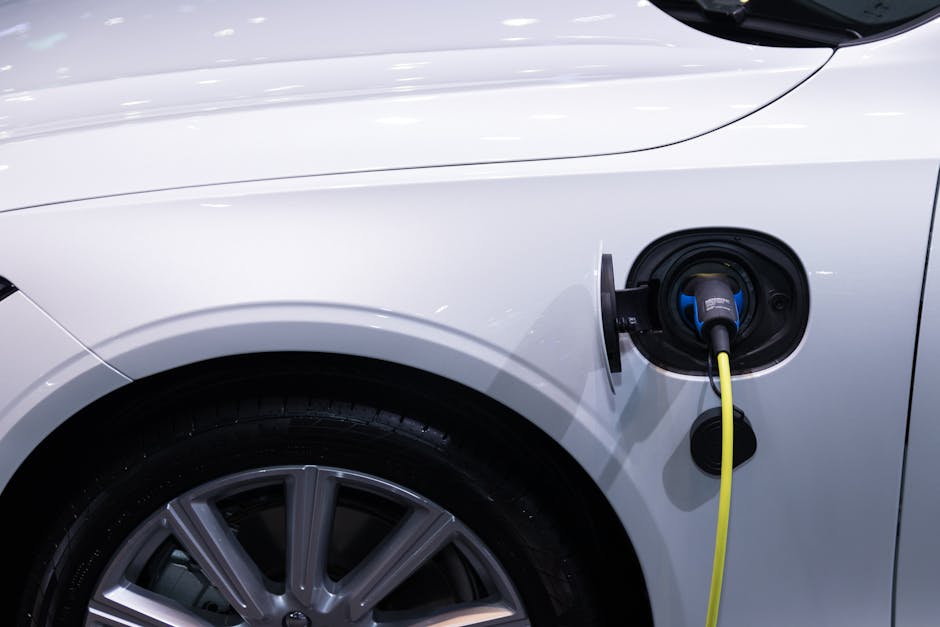

Converting gas vehicles to electric power seems impossibly complex. However, modern components make conversions achievable for determined enthusiasts.
Professional conversions cost $20,000-50,000 for labor alone. Consequently, DIY projects save substantial money while teaching valuable skills.
1. Understand the Basic Conversion Components
Electric conversions replace engines with simplified drivetrain systems. Additionally, understanding each component prevents overwhelming confusion.
Electric motors replace internal combustion engines completely. Subsequently, you’ll need motors producing adequate power and torque.
Battery packs store energy replacing fuel tanks. Moreover, pack size determines your vehicle’s driving range.
Controllers manage power flow from batteries to motors. Therefore, they function like electronic throttles controlling speed.
Chargers refill battery packs from electrical outlets. Additionally, charging speed depends on charger and outlet capacity.
| Component | Purpose | Typical Cost | Selection Criteria |
|---|---|---|---|
| Electric Motor | Power generation | $2,000-5,000 | Power, torque, size |
| Battery Pack | Energy storage | $5,000-15,000 | Range, weight, chemistry |
| Controller | Power management | $1,000-3,000 | Voltage, amperage rating |
| Charger | Battery refill | $500-2,000 | Speed, compatibility |
2. Choose the Right Donor Vehicle
Vehicle selection dramatically affects conversion difficulty and success. Nevertheless, certain characteristics simplify the conversion process significantly.
Lightweight vehicles maximize range from limited battery capacity. Consequently, small cars and trucks make ideal conversion candidates.
Manual transmissions work better than automatics initially. Additionally, you can eliminate transmissions entirely with proper gearing.
Older vehicles lack complex computer systems complicating conversions. Therefore, pre-1990s vehicles often prove simpler projects.
Choose vehicles with strong enthusiast communities. Moreover, others have solved problems you’ll inevitably encounter.
3. Calculate Required Range and Performance
Realistic expectations prevent disappointment and budget overruns. However, understanding tradeoffs guides appropriate component selection.
Daily driving rarely exceeds 40-50 miles typically. Subsequently, 80-100 mile range handles most real-world needs.
Higher speeds consume battery power exponentially faster. Additionally, highway driving significantly reduces effective range.
Consider your typical driving patterns honestly. Therefore, you’ll size battery packs appropriately without overbuilding.
Performance and range compete for limited battery capacity. Moreover, prioritizing one necessarily compromises the other.
4. Remove the Internal Combustion Engine
Engine removal represents the first major conversion step. Nevertheless, this process proves simpler than most anticipate.
Drain all fluids before disconnecting fuel and cooling lines. Subsequently, you’ll prevent dangerous spills and contamination.
Label and photograph every electrical connection during removal. Additionally, some wiring may prove useful later.
Support the engine properly before removing mounts. Therefore, you’ll prevent dangerous drops or vehicle damage.
Remove the fuel tank and exhaust system completely. Moreover, this eliminates fire hazards and frees valuable space.
5. Select and Mount Your Electric Motor
Motor selection balances power requirements with budget constraints. However, adequate power ensures satisfying performance and drivability.
AC motors provide smoother power delivery than DC. Consequently, modern conversions increasingly favor AC systems.
Mount motors using custom adapter plates to transmissions. Additionally, some conversions couple motors directly to differentials.
Ensure proper alignment preventing bearing and coupling failures. Therefore, measure carefully and verify before final tightening.
Consider motor cooling requirements in your mounting location. Moreover, adequate airflow prevents overheating and damage.
| Motor Type | Advantages | Disadvantages | Best Applications |
|---|---|---|---|
| DC Series | Simple, cheap | Less efficient | Budget conversions |
| DC Brushless | More efficient | More complex | Performance builds |
| AC Induction | Smooth, powerful | Expensive controller | Modern conversions |
| Permanent Magnet | Compact, powerful | Heat sensitive | Space-constrained builds |
6. Design and Install Battery Packs
Battery pack design determines range, weight, and safety. Additionally, proper installation ensures safety and long-term reliability.
Lithium batteries offer superior energy density over lead-acid. Subsequently, they provide more range for equivalent weight.
Distribute battery weight low and centered for handling. Therefore, you’ll maintain or improve vehicle dynamics.
Use proper battery boxes protecting cells from damage. Moreover, ventilation prevents dangerous gas accumulation inside.
Install battery management systems monitoring individual cells. Consequently, you’ll prevent damage from overcharging or over-discharging.
7. Wire the High-Voltage System Safely
High-voltage systems require careful planning and execution. However, proper technique ensures safe and reliable operation.
Use appropriately rated cables for maximum current flow. Subsequently, undersized wires overheat and create fire hazards.
Install emergency disconnect switches within easy reach. Additionally, these enable safe maintenance and emergency shutdown.
Protect all connections from moisture and vibration. Therefore, you’ll prevent dangerous shorts and connection failures.
Follow electrical codes for high-voltage automotive systems. Moreover, proper installation ensures safety and insurance compliance.
8. Integrate the Motor Controller
Controllers translate throttle input into motor commands. Nevertheless, proper tuning optimizes performance and efficiency.
Mount controllers in well-ventilated areas preventing overheating. Subsequently, they’ll operate reliably without thermal shutdowns.
Program controllers following manufacturer instructions carefully. Additionally, incorrect settings damage motors or controllers permanently.
Install temperature sensors monitoring controller conditions. Therefore, you’ll receive warnings before critical failures occur.
Test at low power levels initially verifying proper operation. Moreover, gradual power increases reveal problems safely.
9. Retain or Modify Existing Systems
Some vehicle systems require adaptation for electric operation. However, planning maintains creature comforts and functionality.
Power steering pumps need electric motors replacing engine drive. Consequently, budget for pump conversion or elimination.
Brake vacuum boosters require electric vacuum pumps. Additionally, some conversions switch to hydraulic brake systems.
Heating systems need electric heaters replacing coolant heat. Therefore, cabin comfort remains available in cold weather.
Retain instrumentation adapting for electric vehicle monitoring. Moreover, familiar gauges make driving feel more normal.
| System | Conversion Method | Cost | Difficulty |
|---|---|---|---|
| Power Steering | Electric pump | $300-600 | Moderate |
| Brake Booster | Vacuum pump | $200-400 | Easy |
| Heating | Electric heater | $400-800 | Moderate |
| Air Conditioning | Electric compressor | $800-1,500 | Difficult |
10. Install Charging Systems
Charging infrastructure determines daily usability significantly. Additionally, planning prevents frustrating limitations later.
Onboard chargers enable charging anywhere outlets exist. Subsequently, you’re not limited to specialized charging stations.
Choose charger capacity balancing speed with electrical capacity. Therefore, overnight home charging becomes practical and convenient.
Install charge ports in accessible, weather-protected locations. Moreover, frequent charging requires easy connection access.
Plan for future upgrades to faster charging systems. Consequently, your conversion remains relevant as technology improves.
11. Address Cooling and Thermal Management
Electric components generate heat requiring proper management. However, cooling systems prove simpler than internal combustion.
Motors need airflow or liquid cooling depending on power. Subsequently, high-performance conversions require dedicated cooling systems.
Controllers generate significant heat under heavy loads. Additionally, heat sinks and fans extend their operational limits.
Battery packs require temperature management for longevity. Therefore, cooling or heating maintains optimal operating temperature.
Monitor temperatures during initial testing phases. Moreover, add cooling capacity if temperatures exceed safe limits.
12. Test and Troubleshoot Systematically
Initial testing reveals problems requiring correction before driving. Nevertheless, systematic approaches identify and resolve issues efficiently.
Start with stationary tests verifying basic motor operation. Consequently, you’ll catch problems before risking vehicle damage.
Test at progressively higher power levels gradually. Additionally, this approach reveals marginal connections or components.
Monitor all voltages and temperatures during testing. Therefore, you’ll identify problems before catastrophic failures occur.
Keep detailed logs of all testing and adjustments. Moreover, documentation helps troubleshoot intermittent problems later.
13. Register and Insure Your Conversion
Legal requirements vary significantly by jurisdiction. However, proper documentation prevents future registration problems.
Research local regulations before beginning conversions. Subsequently, you’ll ensure compliance with safety and emissions requirements.
Document all conversion work with photos and receipts. Additionally, inspectors may require proof of proper installation.
Notify insurance companies about conversions before driving. Therefore, you’ll ensure coverage remains valid after modifications.
Join EV conversion organizations providing legal guidance. Moreover, experienced members navigate bureaucratic requirements successfully.
14. Budget Realistically for Your Project
Conversion costs vary widely depending on choices. Nevertheless, understanding typical expenses prevents financial surprises.
Basic conversions start around $8,000 for minimal range. Consequently, budget projects sacrifice performance and comfort.
Mid-range conversions cost $15,000-25,000 for usable vehicles. Additionally, these provide adequate performance and range.
Premium conversions exceed $30,000 with extensive capabilities. Therefore, they rival or exceed new electric vehicle costs.
Spread expenses over extended timeframes if needed. Moreover, phased completion prevents overwhelming financial burden.
| Conversion Type | Budget Range | Expected Range | Performance Level |
|---|---|---|---|
| Basic | $8,000-12,000 | 40-60 miles | Commuter adequate |
| Standard | $15,000-25,000 | 80-100 miles | Daily driver capable |
| Performance | $25,000-40,000 | 100-150 miles | Sporty acceleration |
| Premium | $40,000+ | 150+ miles | Exceptional all-around |
15. Join Communities and Share Knowledge
Conversion communities provide invaluable support and resources. Additionally, shared knowledge accelerates your learning significantly.
Join online forums specific to EV conversions. Subsequently, you’ll access collective wisdom from experienced converters.
Attend EV conversion workshops and conferences. Therefore, you’ll learn hands-on from successful builders.
Document your conversion helping future converters. Moreover, teaching reinforces your own understanding and skills.
Share both successes and failures honestly. Consequently, others learn from your experiences avoiding similar problems.
16. Maintain Your Converted Vehicle
Electric vehicles require different maintenance than gas vehicles. However, overall maintenance demands decrease dramatically.
Inspect electrical connections regularly for corrosion. Subsequently, clean and protect connections preventing failures.
Monitor battery health tracking capacity over time. Additionally, early detection prevents being stranded unexpectedly.
Check motor brushes if using brushed DC motors. Therefore, you’ll replace them before damaging commutators.
Update controller software as manufacturers release improvements. Moreover, updates often enhance performance and efficiency.
Conclusion
Electric vehicle conversions challenge but reward determined builders. Moreover, modern components make successful projects increasingly achievable.
Start with realistic expectations about complexity and costs. Consequently, you’ll maintain motivation through inevitable challenges.
Choose appropriate donor vehicles matching your capabilities. Additionally, simpler projects build skills for future conversions.
Connect with experienced converters willing to share knowledge. Therefore, you’ll avoid repeating common mistakes unnecessarily.
Your completed conversion provides unique satisfaction and capability. Furthermore, you’ll drive knowing you created something truly special.