
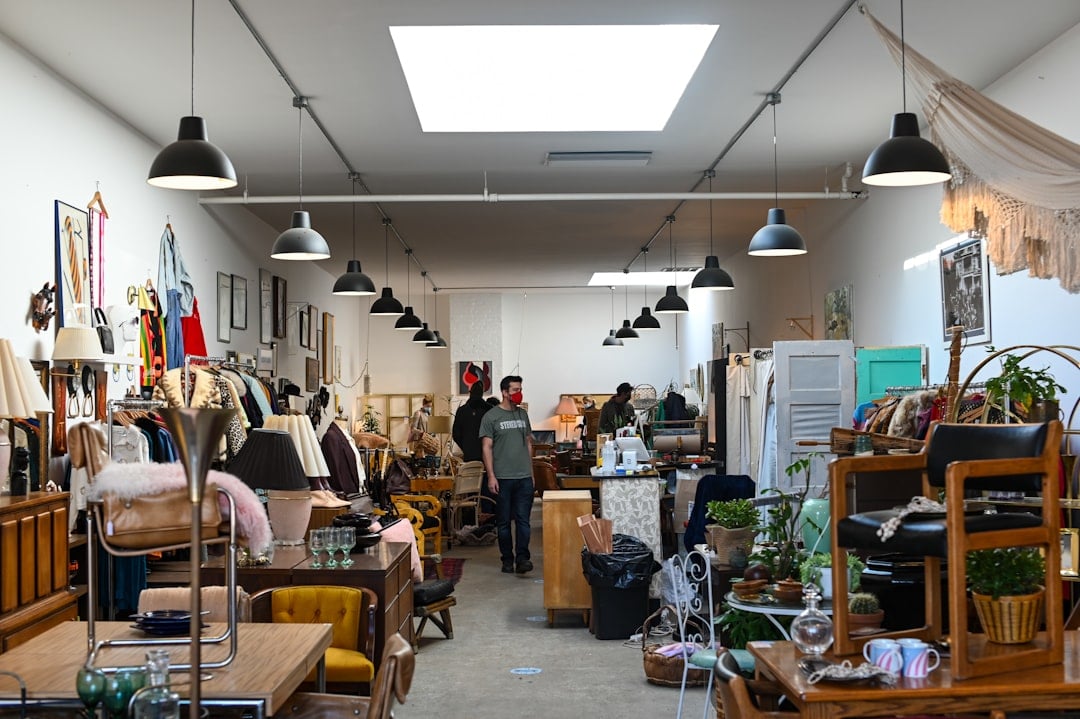

Thrift store furniture can become your home’s centerpiece with the right transformation techniques. Moreover, you’ll save thousands compared to buying new designer pieces. Consequently, this guide shows you exactly how to spot potential and execute professional-level makeovers.
1. Spotting Diamond-in-the-Rough Pieces
The best thrift store finds hide under ugly paint and worn upholstery. Therefore, you need to look beyond surface damage to see the bones underneath.
Solid wood furniture always beats particle board or MDF. Additionally, check joints by gently rocking the piece back and forth. Furthermore, dovetail joints indicate quality craftsmanship worth your time.
Mid-century modern pieces typically feature tapered legs and clean lines. Meanwhile, vintage wooden chairs often have hand-carved details you can’t find today. Similarly, old dressers with real wood drawers offer superior durability.
Scratches, dents, and dated finishes shouldn’t scare you away. In fact, these imperfections usually mean lower prices. Nevertheless, avoid pieces with structural damage like broken legs or cracked frames.
| Red Flags to Avoid | Green Lights to Buy |
|---|---|
| Warped wood | Solid wood construction |
| Broken joints | Minor surface damage |
| Particle board construction | Dovetail joints |
| Water damage/mold | Dated paint or stain |
| Missing hardware (hard to replace) | Unique vintage details |
2. Essential Tools and Materials
Your transformation toolkit doesn’t require a huge investment. However, quality basics make every project easier and more professional-looking.
Start with 120, 180, and 220-grit sandpaper for different stages. Then, add a palm sander to save hours on larger surfaces. Subsequently, grab painter’s tape, drop cloths, and quality brushes.
Primer creates the foundation for lasting paint adhesion. Moreover, it blocks stains and prevents wood tannins from bleeding through. Therefore, never skip this crucial step regardless of time pressure.
Paint options include chalk paint for matte finishes or latex for durability. Meanwhile, wood stain highlights natural grain for a classic look. Furthermore, polyurethane or wax provides protective topcoats.
Hardware replacements instantly modernize any piece you’re transforming. Consequently, budget for new knobs, pulls, or handles. Additionally, websites offer endless options from modern to vintage styles.
3. Preparation Makes Perfect Results
Proper prep work determines your final outcome more than paint selection. Thus, rushing this stage guarantees disappointing results and wasted effort.
Clean every surface with TSP cleaner or degreasing soap first. Otherwise, dirt and oils prevent paint from adhering properly. Subsequently, let everything dry completely before moving forward.
Remove all hardware, doors, and drawers before you begin. Then, label each piece so reassembly becomes effortless later. Meanwhile, fill any gouges or holes with wood filler.
Sanding creates the rough surface that paint needs to grip. Moreover, it removes old finishes that would cause peeling later. Therefore, sand until the surface feels uniformly smooth.
Wipe away all dust with a tack cloth after sanding. In fact, even tiny particles create bumps in your finish. Furthermore, vacuum the area to eliminate airborne dust completely.
4. Painting Techniques That Look Professional
Your painting method matters as much as the paint itself. Consequently, learning proper technique separates amateur from professional-looking results.
Apply primer in thin, even coats rather than one thick layer. Then, let it dry according to manufacturer instructions completely. Meanwhile, lightly sand between coats for ultra-smooth finishes.
Use long, smooth strokes in the direction of the wood grain. Additionally, avoid overworking areas or going back over wet paint. Furthermore, two thin coats always beat one thick coat.
Spray paint offers the smoothest finish for detailed pieces. However, it requires proper ventilation and careful masking. Therefore, practice on scrap wood before tackling your furniture.
Distressing adds character by revealing wood or lower paint layers. Thus, sand edges and high-traffic areas after your final coat dries. Subsequently, seal everything with your chosen topcoat for protection.
| Painting Method | Best For | Difficulty Level |
|---|---|---|
| Brush application | Large flat surfaces | Beginner |
| Foam roller | Smooth modern finishes | Beginner |
| Spray paint | Intricate details | Intermediate |
| Paint sprayer | Large projects | Advanced |
5. Upholstery Updates Without Professional Help
Reupholstering chairs and benches seems intimidating but follows simple steps. Moreover, you’ll save hundreds compared to professional services.
Remove old fabric by pulling out staples with pliers. Then, use the old fabric as your pattern template. Meanwhile, add extra inches on all sides for wrapping.
Choose durable upholstery fabric that can handle daily use. Furthermore, outdoor fabric offers stain resistance for family-friendly pieces. Additionally, velvet or linen creates luxurious statement pieces.
Foam replacement instantly improves comfort in worn-out cushions. Therefore, measure thickness carefully and use electric knives for cutting. Subsequently, add batting over foam for professional-looking smoothness.
Start stapling from the center of each side and work outward. Then, pull fabric taut but not stretched while stapling. Meanwhile, fold corners neatly like wrapping a present.
6. Hardware Upgrades That Transform Everything
Swapping hardware instantly modernizes any piece without painting. Consequently, this simple change delivers maximum visual impact.
Measure existing holes before shopping for replacements online. Otherwise, you’ll need to drill new holes or fill old ones. Therefore, take dimensions for hole spacing and diameter.
Brass hardware adds warmth while matte black creates modern drama. Meanwhile, glass knobs offer vintage charm on dressers. Furthermore, leather pulls provide unexpected texture and sophistication.
Fill old hardware holes with wood filler if switching styles. Then, sand smooth and touch up with paint or stain. Subsequently, drill new holes using a template for perfect alignment.
7. Styling Your Statement Piece
Placement and styling determine whether your furniture truly becomes a statement. Thus, thoughtful positioning maximizes your transformation’s impact.
Position statement pieces where they’ll be noticed immediately upon entering. Moreover, avoid cluttering them with too many decorative objects. Therefore, less is more when showcasing your handiwork.
Contrast your piece against wall colors for maximum pop. Additionally, proper lighting highlights your furniture’s best features. Furthermore, consider adding artwork above to create a cohesive vignette.
Conclusion
Transforming thrift store furniture into statement pieces requires patience and proper technique. However, the results deliver unique pieces that reflect your personal style while saving money. Start with smaller projects to build confidence before tackling complex pieces. Remember that mistakes become learning experiences, and even professionals started as beginners. Your first transformation might not be perfect, but it will absolutely be yours. The skills you develop will serve you for years of future projects. Most importantly, you’ll never look at thrift stores the same way again.
